| We've been in business for six years. |
| We have initiated restoration on over 2500 acres |
| Our Mission The mission of the Eastern Nevada Landscape Coalition is to restore the dynamic and diverse landscapes of the Great Basin for present and future generations through collaborative efforts. |
Our Vision for the Eastern Nevada Landscape Coalition We envision a future where communities of plants and animals thrive in their Great Basin environment. These healed, diverse landscapes will be a result of restoration achieved and maintained with naturally occurring disturbances such as fire, in combination with other management prescriptions, including traditional uses. The Eastern Nevada Landscape Coalition will be a recognized contributor and leader in this effort for future generations of Americans, both local and national. Eastern Nevada Landscape Coalition is a 501C non profit organization. |
To help facilitate the use of the best available science for ENLC's restoration efforts, ENLC established a science committee. The science committee is made up of a diverse group of scientists and individuals with a strong interest in science. This group includes individuals from public land management agencies, University of Nevada Reno, Utah State University, other non profits affiliated with the Coalition including The Nature Conservancy and Coalition Board members who have a strong interest in research. The science committee outlines baseline data requirements, is in the process of identifying what data has already been collected, and in what areas additional data should be collected to properly monitor projects affiliated with Coalition's mission. There are consequences of doing nothing in natural resource management. What are they? ENLC scientists produced a white paper entitled "The Consequences of Doing Nothing", which discusses the history of the eastern Nevada landscape and how past management has brought us to this point. Also discussed are the consequences of doing nothing, and the forecast is catastrophic given the ecological conditions and threats from invasive species. This paper was published in Rangelands, The Society for Range Management this past year. Science Committee Updates: On January 14, 2005 Bob Wilson was designated by the ENLC Board of Trustees as the new Chairman of the ENLC Science Committee. To learn more about Bob, please see the biographies page. Bob plans to overhaul the committee and to inject new life into the committee. We will post committee meeting dates on the website. Previous projects involving the Science Committee. Reviewed the Ely BLM's draft EIS and Resource Management Plan Reviewed and approved vegetation cover data collection methods used by ENLC staff ecologists and The Nature Conservancy ecologist working in the area. The Efroymson Conference - This report was provided to the BLM by the Coalition's partner, The Nature Conservancy of Nevada, to highlight management needs for the Bureau of Land Management Ely District. |
| For more information about any of the information contained within this website, please call ENLC at 775-289-7974 Monday through Friday between 8:00 a.m and 4:00 p.m. PST |
All of us have an interest in how the landscapes should be cared for. For some it is conservation of our open spaces. For others it is appreciation for what these open spaces provide. Still others simply enjoy the beauty of these landscapes. Maybe your reasons are similar or maybe you have entirely different reasons that explain why you care about the landscapes. For whatever the reasons, there is no doubt that we are all concerned about the landscape condition. So "Why Now?" The reason is simple and complex at the same time. If you look at it simply, then you must realize that the landscapes of yesterday are not the landscapes of today. In Eastern Nevada many native plant species are literally losing ground, while non-native plants and invasive plants are gaining ground. When something as simple as plant life changes it affects every living specie. Many Nevada landscapes are at a critical juncture. We cannot continue as we did in the past, nor can we simply section these areas off and hope they reestablish. The above answers seem simple, but we all know it is also complex. Dr. Barry L. Perryman, Dr. William I. Morrill, and Robert Wilson, in concurrence with the University of Nevada Reno, studied the problem and collaborated to write a white paper titled, "The Consequences of Doing Nothing". This white paper provides answers to the question "WHY NOW?" in detail. This paper explains how we came to this critical moment, and what must be done to resolve the situation. Whether you are looking for simple or complex answers the results are the same. Now is the time for active involvement in landscape management. If we do not act now, the landscapes we remember fondly may not be available for future generations to enjoy. So now that we have answered "WHY NOW?", we need to instead ask, "WHAT CAN I DO?" For this answer, join the Eastern Nevada Landscape Coalition and do all you can! |
| We are dedicated to restoring the landscape health of the Great Basin. |
| Welcome to the Eastern Nevada Landscape Coalition, where commitment, imagination and implementation have resulted in a community based partnership to maintain and restore healthy ecosystems for present and future generations. |
| Thanks to our 2007 Annual Meeting and Field Tour Sponsors Nevada Big Horns Unlimited Cruise In Car Wash & Lube D & D Financial First National Bank of Ely Gary Back Hotel Nevada Louise Herndon National Mustang Association Nevada Division of Forestry Resource Concepts, Inc. S&S Macfarlan Southern Nevada Water Authority SRK Consulting The Nature Conservancy We look forward to seeing you at the 2008 Annual Meeting and Field Tour on June 13, 2008. |
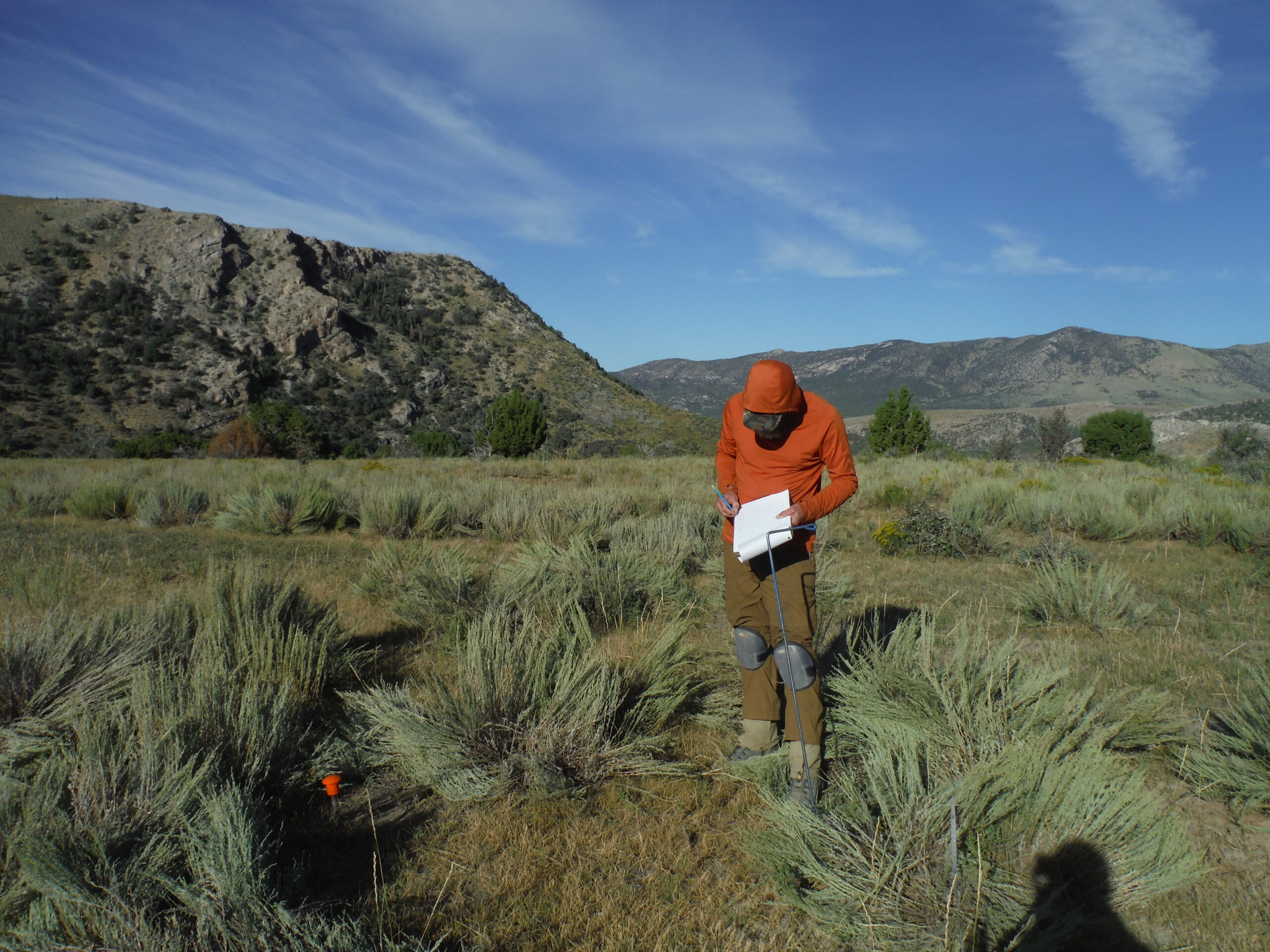
| Above: Photograph taken during the 2007 field season by an ESR crew. |
| May 7, 2008 Updates: Home Page (this page) * Eighth Annual Meeting and Field Tour Information *Meeting Pre-Registration Form Career Opportunities |
| 2008 Annual Meeting and Field Tour Information (Click Link to View) |
| 2008 Annual Meeting Pre-Registration Form (Click Link to View) |
| Dwarf sand verbena |
| Beavertail pricklypear |
| Deathcamas |
| Colorado four o’clock |
| Winding mariposa lily |
| Photos above were taken by Greg Gust in 2008. |
| More information on Each Image Above: 1. Abronia nana – Dwarf sand verbena 2. Zigadenus venenosus – Deathcamas 3. Opuntia basilaris var. basilaris – Beavertail pricklypear 4. Mirabilis multiflora – Colorado four o’clock 5. Calochortus flexuosus – Winding mariposa lily |